
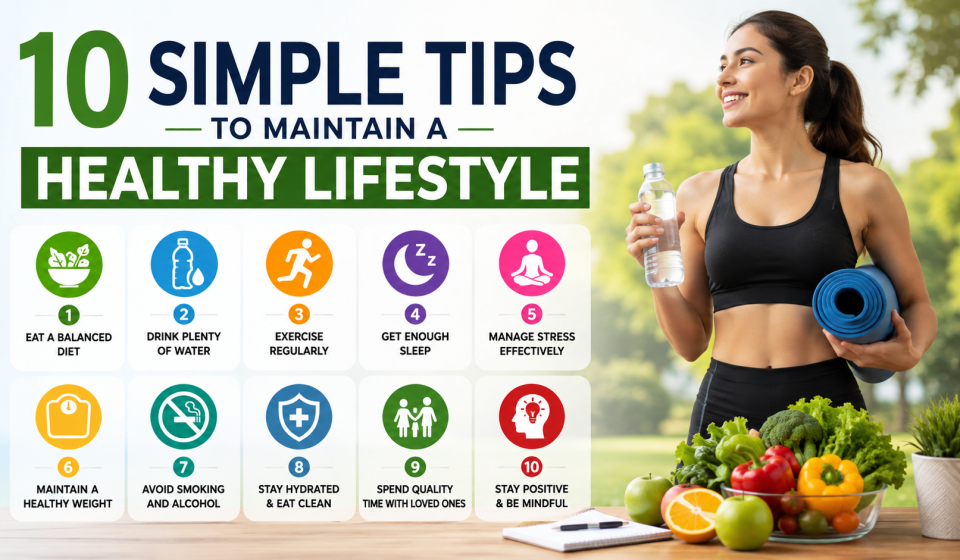

Discover 10 simple tips to maintain a healthy lifestyle, including healthy eating, daily exercise, quality sleep, hydration, stress management, and easy habits for better overall health.
Maintaining a healthy lifestyle is one of the best ways to improve your overall well-being, increase your energy levels, and reduce the risk of various health problems. In today’s busy world, many people struggle to balance work, family responsibilities, physical activity, and personal health. Unhealthy eating habits, lack of exercise, stress, and insufficient sleep can gradually affect both physical and mental health.
The good news is that living a healthier life does not require expensive gym memberships, strict diets, or dramatic lifestyle changes. Small, consistent improvements in your daily routine can make a meaningful difference over time. Simple habits such as eating nutritious foods, drinking enough water, walking regularly, sleeping well, and managing stress can help you feel better and maintain a healthier body and mind.
A healthy lifestyle is not about being perfect. It is about making better choices whenever possible and developing habits that you can maintain for years. Whether you are a student, a working professional, or someone looking to improve your daily routine, these ten simple tips can help you take the first step toward a healthier and happier life.
1. Eat a Balanced and Nutritious Diet
A balanced diet is the foundation of a healthy lifestyle. Your body needs different nutrients to function properly, support immunity, maintain energy, and repair tissues. Eating a variety of nutritious foods helps provide essential vitamins, minerals, protein, carbohydrates, healthy fats, and fiber.
Include plenty of fruits and vegetables in your daily meals. Whole grains, beans, lentils, nuts, seeds, and suitable sources of protein can also contribute to a balanced diet. For example, you might choose oats or whole-grain bread for breakfast, vegetables and dal for lunch, and a balanced dinner containing vegetables and a protein source.
Try to limit foods that contain excessive amounts of added sugar, salt, and unhealthy fats. Packaged snacks, sugary drinks, and heavily processed foods can be convenient, but eating them too frequently may make it harder to maintain healthy eating habits.
You do not need to eliminate every food you enjoy. Instead, focus on variety, moderation, and appropriate portions. Planning meals in advance and preparing food at home can also help you make healthier choices.
Simple tip: Add one fruit or an extra serving of vegetables to your daily meals.
2. Drink Enough Water Every Day
Water plays an essential role in maintaining body temperature, supporting digestion, transporting nutrients, and helping the body function properly. Not drinking enough fluids may contribute to dehydration, tiredness, headaches, and difficulty concentrating.
Your daily fluid needs depend on factors such as age, activity level, weather, and overall health. People who exercise regularly or spend time outdoors in hot weather may need more fluids than those who are less active.
Keep a reusable water bottle nearby to remind yourself to drink throughout the day. Drinking water with meals and after physical activity can also help you maintain regular hydration. Water-rich foods, such as cucumbers, oranges, and watermelon, contribute to fluid intake as well.
Although water is an excellent everyday choice, you do not need to follow one fixed amount regardless of your circumstances. Pay attention to thirst and your body’s needs, particularly during hot weather. Some people with medical conditions may need specific fluid limits recommended by a healthcare professional.
Try to replace sugary beverages with water more often. This is a simple way to reduce added sugar while supporting hydration.
Simple tip: Keep water within reach at your desk, while studying, or when travelling.
3. Exercise Regularly
Regular physical activity is important for maintaining a healthy heart, strengthening muscles and bones, improving mood, and supporting overall fitness. Exercise can also help with sleep, energy levels, and weight management.
You do not have to join a gym or follow an intense workout plan to become more active. Walking, cycling, dancing, swimming, gardening, and playing outdoor games are all useful ways to move your body.
Adults are generally advised to aim for at least 150 minutes of moderate-intensity aerobic activity each week, along with muscle-strengthening activities on two or more days, according to World Health Organization guidance. However, beginners can start with shorter sessions and gradually increase their activity.
For example, you could walk for 10 to 15 minutes each day and increase the duration as your fitness improves. Taking the stairs, walking during breaks, or doing a short home workout can also help reduce sedentary time.
Choose activities that you enjoy because they are more likely to become a regular part of your routine. If you have a medical condition or have been inactive for a long time, seek appropriate professional guidance before starting strenuous exercise.
Simple tip: Begin with a daily walk and gradually build a consistent exercise routine.
4. Get Enough Quality Sleep
Sleep is essential for physical recovery, brain function, emotional well-being, and concentration. When you consistently get insufficient sleep, you may experience tiredness, irritability, reduced productivity, and difficulty focusing.
Most adults need at least seven hours of sleep per night, although individual needs vary. Teenagers and children generally require more sleep than adults.
To improve your sleep, try to go to bed and wake up at approximately the same time every day, including weekends. Establish a relaxing bedtime routine, such as reading, listening to calming music, or taking a warm shower.
Avoid heavy meals close to bedtime if they disturb your sleep. Limiting caffeine later in the day and reducing screen use before bed may also help. Keep your bedroom quiet, comfortable, and dark whenever possible.
If you regularly have trouble falling asleep, wake up frequently, or feel excessively sleepy during the day despite getting enough sleep, consider speaking with a healthcare professional.
Simple tip: Set a consistent bedtime and aim for seven to nine hours of sleep if you are an adult.
5. Manage Stress in Healthy Ways
Stress is a normal part of life, but prolonged stress can affect your mood, sleep, relationships, concentration, and physical health. Work deadlines, academic pressure, financial concerns, and family responsibilities can all contribute to stress.
Learning to manage stress can help you maintain emotional balance and make healthier decisions. Start by identifying situations that commonly cause stress and considering what you can realistically change.
Simple relaxation practices may include deep breathing, meditation, gentle stretching, journaling, listening to music, or spending time outdoors. Even a few minutes of quiet time during a busy day can help you pause and refocus.
Organizing your tasks into smaller steps can make challenging responsibilities feel more manageable. Make time for hobbies, social activities, and regular breaks rather than expecting yourself to remain productive every minute.
Talking to a trusted friend, family member, or counsellor can also provide emotional support. If stress becomes overwhelming or begins to interfere with everyday life, seeking professional help is a positive step.
Simple tip: Spend five to ten minutes each day practising a relaxing activity that you enjoy.
6. Maintain Good Personal Hygiene
Personal hygiene is an important part of maintaining health and preventing the spread of infections. Everyday habits can help protect you and the people around you.
Wash your hands with soap and clean water, especially before preparing or eating food, after using the toilet, and after coughing or sneezing. If soap and water are unavailable, an appropriate alcohol-based hand sanitizer can be useful.
Brush your teeth twice a day with fluoride toothpaste and clean between your teeth regularly. Good oral hygiene helps prevent tooth decay and gum disease. Schedule dental check-ups according to your needs and your dentist’s advice.
Bathe regularly, wear clean clothes, and keep your nails clean. Proper food hygiene is equally important: wash produce, store food at safe temperatures, and keep raw foods separate from ready-to-eat foods.
Avoid sharing personal items such as toothbrushes and razors. If you are unwell, follow appropriate hygiene practices to reduce the chance of spreading illness to others.
Simple tip: Make handwashing, twice-daily toothbrushing, and clean food preparation part of your daily routine.
7. Reduce Sitting Time and Stay Active Throughout the Day
Even people who exercise regularly may spend many hours sitting at a desk, studying, travelling, or using electronic devices. Long periods of inactivity can make it harder to maintain an active lifestyle.
Breaking up sitting time is a practical way to introduce more movement into your day. You do not need to complete a full workout every time you take a break. Standing, stretching, walking around the room, or performing a few gentle movements can help you interrupt long periods of sitting.
If you study or work on a computer, set a reminder to move around periodically. Walk while talking on the phone, take short walking breaks between tasks, or use the stairs when appropriate.
You can also make your environment more supportive of movement by keeping frequently used items slightly farther away from your desk or choosing to walk for short trips when safe and practical.
The goal is not to avoid sitting completely. Instead, combine regular exercise with more movement throughout your day.
Simple tip: Take a short movement break every 30 to 60 minutes when your schedule allows.
8. Avoid Smoking and Limit Alcohol
Avoiding tobacco is one of the most important steps you can take to protect your health. Smoking is associated with serious conditions, including heart disease, stroke, lung disease, and several types of cancer. Second-hand smoke can also harm other people.
If you smoke, consider speaking with a healthcare professional about evidence-based ways to quit. Support from trained professionals, counselling, and suitable cessation treatments can improve the chances of success.
Alcohol can also pose health risks, including injuries, liver disease, dependence, and certain cancers. Drinking less reduces alcohol-related risk, and not drinking is a healthy option. People who do not drink should not start for supposed health benefits.
If you choose to drink, understand that lower consumption generally means lower risk, and avoid drinking before driving or performing activities that require alertness. Pregnant people, people taking certain medications, and those with particular medical conditions should avoid alcohol as advised by their healthcare professionals.
Healthy lifestyle choices also include avoiding the non-medical use of drugs and seeking help when substance use becomes difficult to control.
Simple tip: Make smoke-free choices and choose water or other non-alcoholic beverages more often.
9. Build Healthy Relationships and Stay Socially Connected
Good relationships are an important part of emotional well-being. Spending time with supportive friends, family members, classmates, or colleagues can help reduce feelings of isolation and provide encouragement during difficult times.
Healthy social connections do not require a large group of friends. A meaningful conversation with one trusted person can be valuable. Make time to check in with people you care about, share your experiences, and listen to their concerns.
Participating in hobbies, community activities, sports, volunteering, or group learning can help you meet people with similar interests. These activities may also provide a sense of belonging and purpose.
It is equally important to maintain healthy boundaries. Learn to say no when necessary, communicate your needs respectfully, and spend time with people who treat you with kindness.
Online communication can help maintain relationships, but try to balance screen-based interaction with meaningful conversations and activities in the real world.
Simple tip: Contact a friend or family member regularly and make time for activities you can enjoy together.
10. Schedule Regular Health Check-Ups and Follow Healthy Habits Consistently
Preventive healthcare helps you understand your health needs and identify potential problems early. Regular check-ups can provide opportunities to discuss blood pressure, dental health, vaccinations, recommended screenings, and other concerns with qualified healthcare professionals.
The appropriate frequency of check-ups depends on your age, medical history, risk factors, and local healthcare recommendations. Not everyone needs the same tests or screenings, so ask a healthcare professional which ones are suitable for you.
Consistency is also important in everyday health habits. You do not need to change your entire lifestyle overnight. Trying to make too many changes at once can feel overwhelming and may make it harder to maintain them.
Instead, choose one or two achievable goals. For example, you could start by walking for 15 minutes daily, eating fruit with breakfast, or going to bed at a regular time. Once these habits become easier, gradually introduce additional changes.
Track your progress in a notebook or calendar. Celebrate small improvements and avoid treating occasional setbacks as failures. A missed workout or an unhealthy meal does not erase your progress.
Simple tip: Choose one healthy habit to improve this week and build on it gradually.
Sources
Conclusion
Maintaining a healthy lifestyle does not require perfection or a complete change in your daily routine. It starts with small, practical decisions that support your physical, mental, and emotional well-being.
Eating a balanced diet, drinking enough water, exercising regularly, getting quality sleep, managing stress, maintaining personal hygiene, reducing sitting time, avoiding smoking, building supportive relationships, and scheduling appropriate health check-ups can all contribute to better overall health.
The most important thing is consistency. Start with the habits that feel easiest to manage, make realistic goals, and gradually improve your routine. Remember that everyone’s health needs are different, so adjust your habits to suit your circumstances and seek professional advice when necessary.
By taking small steps every day, you can work toward a healthier, more active, and more balanced life. Start today, stay patient with yourself, and focus on progress rather than perfection.
Frequently Asked Questions (FAQs)
1. What are the 10 simple tips to maintain a healthy lifestyle?
The ten tips are eating a balanced diet, drinking enough water, exercising regularly, getting sufficient sleep, managing stress, maintaining personal hygiene, reducing sitting time, avoiding smoking and limiting alcohol, building healthy relationships, and scheduling regular health check-ups.
2. How can I start living a healthy lifestyle?
Start with small changes that fit your daily routine. Drink water regularly, add more fruits and vegetables to your meals, take short walks, maintain a consistent sleep schedule, and set realistic goals. Gradually introduce more healthy habits as you become comfortable with your routine.
3. How much exercise do adults need each week?
According to the World Health Organization, adults should generally aim for at least 150 minutes of moderate-intensity aerobic physical activity per week, along with muscle-strengthening activities on two or more days. Beginners can start slowly and increase activity gradually.
4. Why is sleep important for a healthy lifestyle?
Quality sleep supports memory, concentration, mood, immune function, and physical recovery. Most adults need at least seven hours of sleep per night. Maintaining a regular sleep schedule and creating a relaxing bedtime routine can improve sleep quality.
5. How long does it take to develop healthy habits?
The time required varies from person to person and depends on the habit, your environment, and your consistency. Some changes may feel easier within a few weeks, while others take longer. Focus on repeating small, achievable actions rather than expecting immediate results.