
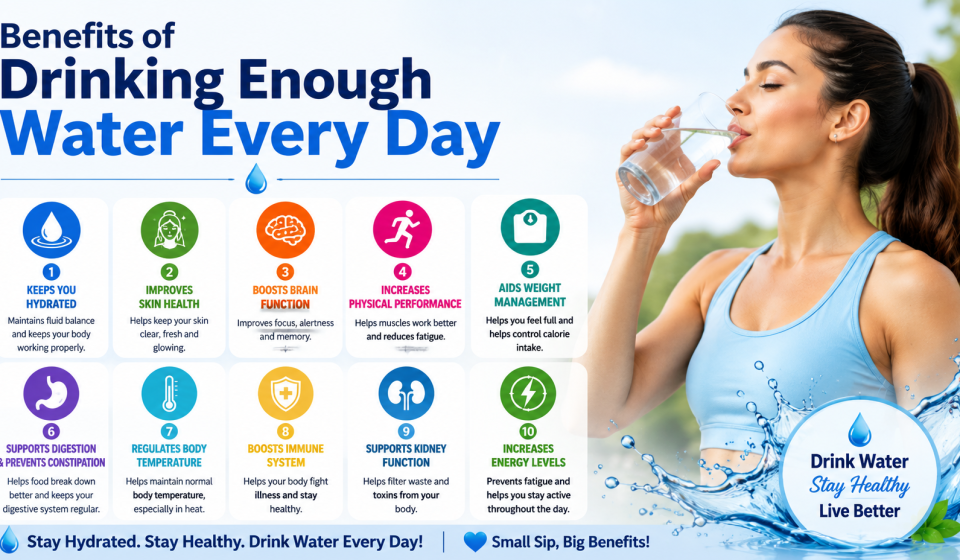

Discover the benefits of drinking enough water every day, from better digestion and healthy skin to improved energy, brain function, and overall wellness.
Water is one of the most important things our bodies need to stay healthy and function properly. Every day, our bodies use water to regulate temperature, transport nutrients, support digestion, remove waste, and maintain normal organ function. Although drinking water is a simple daily habit, many people forget to drink enough throughout their busy schedules. Whether you are working in an office, studying, exercising, or managing household activities, staying hydrated is essential for maintaining your overall health and well-being.
The benefits of drinking enough water every day go beyond simply satisfying thirst. Proper hydration helps your body replace fluids lost through sweating, breathing, and urination. It can also help prevent dehydration, support normal digestion, and maintain physical and mental performance. Developing a regular water-drinking habit is an easy and affordable way to support a healthier lifestyle. In this article, we will explore the major health benefits of water, how much water you may need, and practical tips to help you stay hydrated every day.
Helps Maintain Overall Body Function
Water plays an essential role in almost every process inside the human body. Your cells, tissues, and organs need sufficient fluids to function properly. Water supports the movement of nutrients through the body and helps maintain normal bodily processes.
When you drink enough water throughout the day, your body can replace the fluids it naturally loses. Proper hydration is especially important during hot weather, physical activity, and periods of illness. Making water a regular part of your daily routine is a simple step toward maintaining good health.
Supports Healthy Digestion
One of the important benefits of drinking enough water every day is that it supports the digestive system. Water helps the body break down food, absorb nutrients, and move waste through the digestive tract.
Insufficient fluid intake can contribute to constipation because the body may absorb more water from waste, making stools harder and more difficult to pass. Drinking adequate fluids, eating fiber-rich foods, and staying physically active can help support regular bowel movements.
For better digestive health, drink water regularly throughout the day and include fruits, vegetables, whole grains, and other fiber-rich foods in your meals.
Helps Prevent Dehydration
Dehydration occurs when your body loses more fluid than it takes in. It can happen during hot weather, intense exercise, fever, vomiting, or diarrhea. Even mild dehydration may cause thirst, tiredness, headaches, and difficulty concentrating.
Drinking water regularly helps replace lost fluids and reduces the risk of dehydration. You should pay particular attention to hydration when working outdoors, spending time in the sun, or participating in physical activities.
Common signs that you may need more fluids include increased thirst, dry mouth, and dark yellow urine. However, urine color can be affected by certain foods, vitamins, and medications, so it should not be the only measure of hydration.
Supports Brain Function and Concentration
Your brain requires adequate hydration to function normally. Not drinking enough fluids may affect concentration, alertness, mood, and mental performance, particularly when dehydration becomes significant.
Students, office workers, and people who spend long hours studying or working on computers may benefit from keeping water nearby and drinking regularly. Proper hydration is especially important during demanding tasks that require attention and clear thinking.
However, water is not a substitute for adequate sleep, balanced nutrition, or regular breaks. Combining these healthy habits can help support better daily performance.
Helps Regulate Body Temperature
Your body produces heat during exercise, movement, and everyday activities. Sweating helps cool the body, but this process also causes fluid loss.
Drinking enough water helps replace the fluids lost through sweating and supports normal temperature regulation. This is particularly important in hot and humid climates, where the body may lose more water than usual.
If you exercise outdoors or work in a hot environment, drink fluids regularly and take appropriate breaks in cooler areas. Do not wait until you feel extremely thirsty before paying attention to hydration.
Supports Kidney Function and Waste Removal
The kidneys filter waste products from the blood and help regulate fluid and electrolyte balance. Water supports these processes and allows the body to remove waste through urine.
Adequate hydration may also help reduce the risk of certain types of kidney stones, particularly in people who are prone to developing them. Drinking enough fluids helps produce urine that is less concentrated, although individual requirements can vary.
It is important to remember that drinking excessive amounts of water does not automatically improve kidney health. People with kidney disease or certain heart and liver conditions may need specific fluid limits recommended by their healthcare professionals.
May Help With Healthy Weight Management
Water can be a useful part of a balanced weight-management plan. Plain water contains no calories, so replacing sugary beverages with water can reduce the number of calories consumed throughout the day.
For example, choosing water instead of sugar-sweetened soft drinks may help reduce added sugar intake. Drinking water before or during meals may also help some people feel fuller, although the effect varies between individuals.
Water alone does not cause significant fat loss or replace the need for a healthy diet and regular physical activity. For sustainable weight management, combine good hydration with balanced meals, sufficient sleep, and consistent exercise.
Helps Lubricate Joints and Protect Tissues
Water supports the body’s tissues and helps maintain the fluids that cushion and lubricate joints. These functions are important for comfortable movement and normal physical activity.
Adequate hydration also helps protect sensitive tissues and supports the normal functioning of muscles and organs. People who exercise regularly should pay attention to fluid intake before, during, and after activity, depending on exercise intensity and the amount of sweating.
Although drinking water supports normal joint function, it is not a treatment for arthritis or other joint disorders. Persistent joint pain should be assessed by a qualified healthcare professional.
Supports Healthy-Looking Skin
Staying hydrated is important for overall health, including the normal functioning of the skin. When the body does not receive enough fluids, dehydration can affect its normal condition and may make the skin appear less fresh.
Drinking enough water helps meet the body’s fluid needs, but it is important to understand that extra water is not a guaranteed solution for acne, wrinkles, or other skin concerns. Skin health also depends on genetics, skincare practices, nutrition, sleep, and sun protection.
For a healthy daily routine, drink fluids regularly, eat a balanced diet, use suitable skincare products, and protect your skin from excessive sun exposure.
May Help Reduce the Risk of Constipation and Some Kidney Stones
Water plays an important role in keeping the digestive system functioning properly. When combined with dietary fiber, adequate fluid intake can help prevent or relieve constipation in people whose symptoms are related to insufficient fluids.
Hydration is also important for people at risk of kidney stones. Drinking enough water can increase urine volume and help reduce the concentration of substances that may form certain types of stones.
However, the amount of water needed depends on individual circumstances. People with a history of kidney stones should ask their healthcare professional about suitable fluid targets and any dietary changes they may need.
Helps Maintain Physical Performance
Water is important for muscles, circulation, and temperature regulation during physical activity. Losing too much fluid through sweating can contribute to fatigue, dizziness, and reduced exercise performance.
Drinking fluids before, during, and after exercise can help replace losses and support normal physical function. The amount needed depends on workout duration, intensity, temperature, and individual sweating patterns.
For most everyday activities, water is an appropriate choice. During prolonged, intense exercise or heavy sweating, electrolyte replacement may sometimes be necessary. Choose a hydration approach that matches the activity rather than assuming everyone needs sports drinks.
Encourages Healthier Daily Habits
Drinking water regularly can encourage a healthier lifestyle by making it easier to choose a simple, low-cost beverage instead of sugary drinks. It is also a convenient habit that can fit into almost any daily schedule.
You can keep a reusable bottle at your desk, drink water with meals, or have a glass after waking up if that helps you remember. These small actions can make hydration more consistent without requiring major lifestyle changes.
Water is not a magic solution for every health problem, but it is an important part of a balanced approach to wellness. Along with nutritious food, physical activity, adequate sleep, and preventive healthcare, proper hydration supports everyday health.
How Much Water Should You Drink Every Day?
There is no single amount of water that is right for everyone. Daily fluid requirements depend on age, body size, activity level, climate, pregnancy or breastfeeding status, and overall health.
You may have heard the common recommendation to drink eight glasses of water daily. This can be a useful reminder for some people, but it is not a universal medical rule. Your total fluid intake includes plain water, other beverages, and moisture from foods such as fruits and vegetables.
You may need additional fluids when exercising, sweating heavily, or spending time in hot weather. Drink regularly throughout the day and respond to thirst. If you have a medical condition that affects fluid balance, follow your healthcare professional’s advice.
Simple Tips to Drink Enough Water Every Day
1. Start your morning with water: Keep a glass of water near your breakfast area so you remember to drink after waking up.
2. Carry a reusable water bottle: Having water available at work, college, or while travelling makes regular drinking easier.
3. Drink water with meals: Make water your usual beverage during breakfast, lunch, and dinner.
4. Set reminders: Use your phone or a simple daily checklist if you often forget to drink water.
5. Choose water instead of sugary drinks: Replace soft drinks and other sugar-sweetened beverages with plain water more often.
6. Add natural flavor: Try lemon slices, cucumber, or mint if you prefer a refreshing taste without added sugar.
7. Eat water-rich foods: Include fruits and vegetables such as watermelon, oranges, cucumber, and tomatoes in your meals.
8. Increase fluids when needed: Pay extra attention to hydration during hot weather, exercise, fever, vomiting, or diarrhea.
9. Spread your intake throughout the day: Drinking gradually is generally more comfortable than consuming a large amount all at once.
10. Avoid forcing excessive water intake: Drinking too much water in a short period can be dangerous. Aim for appropriate hydration rather than drinking as much as possible.
What Happens If You Do Not Drink Enough Water?
When you do not replace the fluids your body loses, dehydration can develop. Early signs may include thirst, dry mouth, dark yellow urine, headache, tiredness, and dizziness.
More severe dehydration may lead to confusion, fainting, or other serious complications that require urgent medical attention. Infants, older adults, people who are ill, and those exposed to extreme heat may need particular attention.
If you experience persistent vomiting or diarrhea, cannot keep fluids down, or develop serious symptoms, seek medical advice promptly. A healthcare professional can help determine the right approach to fluid replacement.
Can You Drink Too Much Water?
Yes. Although water is essential, consuming excessive amounts, especially in a short period, can lower the sodium concentration in your blood. This condition is called hyponatremia and can be dangerous.
Do not force yourself to drink large amounts just to reach a particular daily target. Your fluid needs depend on your circumstances, and people with certain medical conditions may require specific limits.
A balanced approach is best: drink regularly, pay attention to thirst and other signs of hydration, and seek professional guidance if you have a condition that affects fluid balance.
Sources and References
- https://www.cdc.gov/healthy-weight-growth/water-healthy-drinks/
- https://www.mayoclinic.org/healthy-lifestyle/nutrition-and-healthy-eating/in-depth/water/art-20044256
- https://www.health.harvard.edu/staying-healthy/how-much-water-should-you-drink
- https://www.mayoclinichealthsystem.org/hometown-health/speaking-of-health/tips-for-drinking-more-water
Conclusion
The benefits of drinking enough water every day include supporting digestion, maintaining normal body temperature, helping the kidneys remove waste, supporting brain function, and replacing fluids lost through everyday activities. Proper hydration can also contribute to physical performance, healthy weight-management habits, and the prevention of dehydration.
Making water a regular part of your daily routine does not need to be complicated. Carry a water bottle, drink with meals, choose water instead of sugary beverages, and increase your intake when your activity level or environment requires it. Remember that individual needs vary, and drinking more water than your body requires is not necessarily better.
Start with small, consistent habits and make hydration part of your overall healthy lifestyle. When combined with balanced nutrition, exercise, sufficient sleep, and appropriate healthcare, drinking enough water can help support your well-being every day.
Frequently Asked Questions (FAQs)
1. What are the main benefits of drinking enough water every day?
Drinking enough water helps prevent dehydration, supports digestion, regulates body temperature, assists waste removal, and helps maintain normal brain and physical function.
2. How many glasses of water should I drink daily?
Water needs vary from person to person. Eight glasses can be a simple starting reminder, but your ideal intake depends on activity, climate, health, and fluids obtained from food and other beverages.
3. Does drinking water improve skin health?
Adequate hydration supports normal skin function and overall health. However, drinking extra water does not guarantee clear skin or eliminate acne and wrinkles.
4. Can drinking enough water help with weight loss?
Water contains no calories, and replacing sugary drinks with water can reduce calorie intake. Water may also help some people feel fuller, but lasting weight management requires a balanced diet and physical activity.
5. What are the signs that I am not drinking enough water?
Common signs include thirst, dry mouth, dark yellow urine, tiredness, headache, and dizziness. Severe symptoms such as confusion or fainting require urgent medical attention.
6. Is it good to drink water immediately after waking up?
Yes, drinking water after waking up is a convenient way to begin your daily hydration routine. However, there is no need to drink a large amount at once or believe that morning water has special detoxifying effects.
7. Can I drink too much water in one day?
Yes. Excessive water intake can cause dangerously low blood sodium levels, particularly when large amounts are consumed quickly. Drink according to your needs rather than forcing excessive amounts.
8. Is plain water better than sugary drinks?
Plain water is an excellent everyday choice because it contains no calories or added sugar. Replacing sugary beverages with water can help reduce added sugar and calorie intake.