
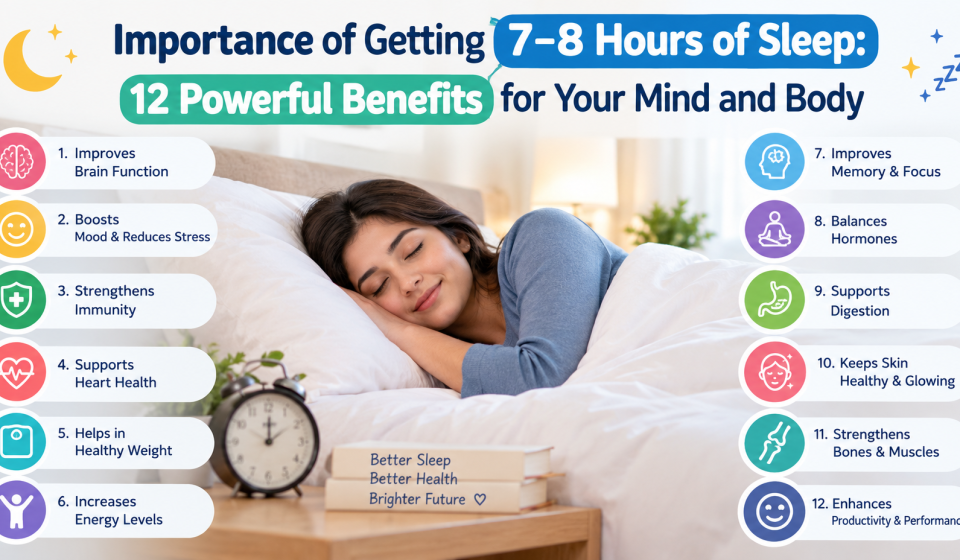

Discover the importance of getting 7–8 hours of sleep every night. Learn how quality sleep improves brain function, heart health, immunity, mood, and overall well-being.
Getting 7–8 hours of sleep every night is one of the simplest and most effective ways to support your overall health. In today’s busy world, many people sacrifice sleep because of work, studies, mobile phones, social media, and daily responsibilities. However, sleep is not a waste of time. It is an essential part of a healthy lifestyle that allows your body and mind to rest, recover, and prepare for the next day. Good-quality sleep can help you feel refreshed, improve your concentration, and maintain your energy throughout the day.
The importance of getting 7–8 hours of sleep goes beyond simply avoiding tiredness. Sleep supports memory, emotional well-being, immune function, and several important processes in the body. Adults generally need at least seven hours of sleep each night, although individual needs may vary. Consistently getting enough restful sleep can help you perform better at work or school and support long-term health. Understanding the benefits of proper sleep and developing healthy bedtime habits can help you improve your quality of life naturally.
Why Is Getting 7–8 Hours of Sleep Important?
Sleep is a natural process that helps the body restore energy and maintain normal functioning. While you sleep, your brain remains active, processing information and supporting memory, while your body carries out repair and maintenance activities.
Most adults benefit from approximately 7–9 hours of sleep per night. Getting 7–8 hours is a useful goal for many adults, but the exact amount depends on age, lifestyle, health, and individual needs.
Regular, good-quality sleep helps you:
- Feel refreshed and energetic in the morning.
- Improve concentration and mental performance.
- Support emotional balance.
- Maintain a healthy immune system.
- Support heart and metabolic health.
- Reduce daytime sleepiness and mistakes.
Both sleep duration and sleep quality matter. Sleeping for eight hours but waking repeatedly throughout the night may not provide the same benefits as uninterrupted, restorative sleep.
Improves Brain Function and Concentration
One of the biggest benefits of getting enough sleep is improved brain function. Your brain processes information, organizes memories, and prepares for the next day while you sleep.
People who get adequate sleep may find it easier to focus on tasks, understand new information, and make decisions. Students can benefit from better concentration during classes and exams, while working professionals may find it easier to manage responsibilities and complete tasks efficiently.
On the other hand, insufficient sleep can make you feel confused, distracted, and mentally exhausted. You may take longer to complete simple tasks or make mistakes that you would normally avoid.
If you want to improve your productivity, start by creating a consistent sleep schedule instead of depending on caffeine or late-night work sessions.
Supports Memory and Learning
Sleep plays an important role in learning and memory. During different stages of sleep, the brain processes and strengthens information gathered throughout the day.
This is especially important for students who study for examinations, learn new skills, or prepare presentations. Studying late into the night may seem productive, but regularly sacrificing sleep can make it harder to remember what you have learned.
For example, a student who studies for several hours and then gets sufficient sleep may be better prepared to recall information the next day than someone who repeatedly stays awake all night.
To support learning, combine effective study techniques with regular sleep. Review important topics, avoid unnecessary all-night study sessions, and give your brain enough time to rest.
Helps Maintain Emotional and Mental Well-Being
Sleep and emotional health are closely connected. Adequate sleep can help you manage everyday stress, respond calmly to challenges, and maintain a more balanced mood.
When you do not sleep enough, small problems may feel more frustrating. You may become impatient, irritable, anxious, or emotionally exhausted. Poor sleep can also be associated with a greater risk of mental health difficulties.
A regular sleep routine can support emotional stability, although it is not a replacement for professional mental health care when needed.
Try to relax before bedtime by reading a book, listening to calming music, practicing gentle breathing exercises, or spending a few minutes away from screens. A peaceful bedtime routine can help prepare your mind for rest.
Supports Heart Health
Your heart and blood vessels benefit from regular, adequate sleep. During normal sleep, heart rate and blood pressure generally change as part of the body’s natural daily rhythm.
Consistently getting too little sleep is associated with an increased risk of high blood pressure, heart disease, and stroke. Although sleep alone cannot prevent these conditions, it is an important part of maintaining overall cardiovascular health.
You can support your heart by combining healthy sleep habits with regular physical activity, balanced meals, stress management, and routine medical checkups.
If you have persistent sleep problems or concerns about your heart health, consult a qualified healthcare professional.
Strengthens Immune System Function
Your immune system protects your body against infections and other harmful organisms. Sleep helps regulate immune activity and supports the body’s normal defense mechanisms.
When you regularly miss out on sleep, your body may not respond to infections as effectively. You may also feel more exhausted when you are unwell.
Getting enough sleep is one part of a healthy immune-supporting routine. Eating nutritious food, drinking enough water, maintaining personal hygiene, and following appropriate vaccination recommendations are also important.
Remember that sleeping for eight hours does not guarantee that you will never get sick. However, consistent, good-quality sleep supports the normal functioning of your immune system.
Helps Maintain a Healthy Weight
Sleep can influence appetite, hunger signals, food choices, and energy levels. Insufficient sleep may affect hormones involved in appetite regulation and increase the desire for high-calorie foods.
When you are tired, you may be more likely to snack frequently, choose sugary foods, or skip physical activity. Over time, these habits can make weight management more difficult.
Getting enough sleep can support healthier decisions and make it easier to maintain a balanced daily routine. However, healthy weight management also depends on nutrition, exercise, genetics, medications, and other factors.
For better results, combine a regular sleep schedule with balanced meals, appropriate portion sizes, and physical activity that suits your needs.
Supports Metabolism and Blood Sugar Regulation
Sleep is important for the body’s metabolism, which includes the processes used to convert food into energy. It also affects how the body responds to insulin, a hormone that helps regulate blood glucose levels.
Regularly getting insufficient sleep is associated with problems in blood sugar regulation and a higher risk of developing type 2 diabetes.
Maintaining consistent sleep and wake times can help support your body’s natural daily rhythms. Avoid making late-night eating and irregular sleep schedules a regular habit if they interfere with your rest or overall health.
People with diabetes or other metabolic conditions should follow their healthcare professional’s advice rather than relying on sleep alone to manage their condition.
Helps the Body Recover and Repair
Sleep provides time for important recovery processes. During sleep, the body supports tissue repair, normal growth-related processes, and muscle recovery.
This is valuable for people who exercise regularly, participate in sports, perform physically demanding work, or spend long hours standing and moving.
When you consistently sleep too little, you may experience tiredness, reduced performance, and difficulty recovering from physical activity.
To support recovery, maintain a regular bedtime, eat a balanced diet, stay hydrated, and allow sufficient rest between demanding workouts.
You do not need expensive products or complicated routines to make sleep a priority. Consistency is often a useful place to start.
Improves Daily Energy and Productivity
Getting adequate sleep can help you feel more alert and ready to manage your daily responsibilities. When you wake up refreshed, routine tasks may feel easier, and you may be less likely to depend on repeated cups of coffee to stay awake.
Poor sleep can cause daytime fatigue, slower reaction times, reduced attention, and lower productivity. These problems can affect students, office workers, drivers, and people working in physically demanding jobs.
For example, a person who sleeps well may find it easier to attend meetings, complete assignments, and organize their day. Someone who regularly sleeps too little may struggle to maintain concentration throughout the afternoon.
If you feel sleepy while driving, do not ignore it. Stop somewhere safe and arrange a safer way to continue your journey. Adequate sleep is important for personal safety as well as productivity.
Promotes Healthy Skin and Overall Appearance
Sleep is often included in healthy skincare routines because it supports normal body recovery and overall well-being. Poor sleep may leave you looking tired, with temporary puffiness around the eyes or a dull appearance.
Getting enough rest may help you look and feel more refreshed. However, sleep is only one factor affecting skin health. Genetics, sun exposure, hydration, nutrition, stress, and skincare habits also play important roles.
For healthier skin, combine adequate sleep with sun protection, gentle cleansing, balanced nutrition, and suitable skincare products.
Be cautious of claims that promise perfect skin simply by sleeping for eight hours. Healthy sleep supports general wellness, but it cannot guarantee specific cosmetic results.
Reduces the Effects of Daytime Sleepiness
Daytime sleepiness can affect your ability to study, work, communicate, and complete everyday activities safely. People who regularly get insufficient sleep may struggle to stay alert during meetings, lectures, or long journeys.
Adequate sleep can reduce sleepiness caused by insufficient rest and support better attention during waking hours.
However, if you regularly feel exhausted despite sleeping for 7–8 hours, the problem may not simply be your bedtime. Interrupted sleep, stress, medication effects, sleep apnea, and other health conditions can affect sleep quality.
Consider speaking with a healthcare professional if persistent tiredness affects your daily life, especially if you snore loudly, wake up gasping, or experience excessive daytime sleepiness.
How to Get 7–8 Hours of Quality Sleep Every Night
Building healthy sleep habits does not need to be complicated. Small changes in your daily routine can make it easier to get sufficient rest.
1. Follow a consistent sleep schedule: Go to bed and wake up at approximately the same time every day, including weekends.
2. Reduce screen time before bed: Smartphones, computers, and televisions can keep you mentally stimulated. Try to spend the last 30–60 minutes before bedtime doing quieter activities.
3. Create a comfortable bedroom: Keep your bedroom dark, quiet, and comfortably cool. Use curtains, earplugs, or other suitable adjustments if necessary.
4. Avoid late caffeine: Coffee, tea, energy drinks, and some other products contain caffeine that can interfere with sleep. Consider avoiding caffeine during the afternoon and evening, depending on your sensitivity.
5. Exercise regularly: Regular physical activity supports health and may improve sleep. If intense exercise close to bedtime makes you feel alert, move it earlier.
6. Get natural daylight: Spending time outdoors during the day, particularly in the morning, can help support your body’s sleep-wake rhythm.
7. Avoid heavy meals just before bed: Large meals close to bedtime may cause discomfort for some people. Choose a schedule that allows you to feel comfortable when sleeping.
8. Manage daily stress: Make time for relaxation, journaling, gentle stretching, or breathing exercises before bed.
9. Limit long or late naps: If daytime naps make it difficult to fall asleep at night, try shorter naps earlier in the day.
10. Give yourself enough time: If you need to wake up at 6:30 a.m., plan your bedtime so you have enough opportunity to sleep for at least seven hours, allowing additional time to fall asleep.
Healthy sleep habits work best when practiced consistently. If you continue to have difficulty sleeping, seek medical advice rather than relying on sleeping pills or supplements without guidance.
What Happens When You Consistently Sleep Less Than 7 Hours?
Occasionally getting less sleep than usual is common, but regularly sleeping too little can affect your health and daily performance.
Possible effects include:
- Difficulty concentrating and remembering information.
- Irritability and mood changes.
- Daytime tiredness and low energy.
- Slower reactions and an increased risk of accidents.
- Changes in appetite and difficulty managing weight.
- Increased risk of certain long-term health problems.
The effects may build up over time, and people do not always recognize how much their performance has declined. Drinking coffee or sleeping longer on the weekend may not fully compensate for a consistently poor sleep schedule.
Rather than trying to recover from sleep deprivation every few days, aim to make adequate sleep a regular part of your lifestyle.
Is Eight Hours of Sleep Better Than Seven Hours?
Both seven and eight hours can be appropriate for many adults. The best amount depends on your individual sleep needs, overall health, and how rested you feel during the day.
If you sleep for seven hours and wake up refreshed, remain alert, and function well, that amount may be sufficient for you. If you continue to feel tired, you may need more sleep or an evaluation of your sleep quality.
Adults generally benefit from 7–9 hours of sleep each night. Teenagers and children need more sleep than adults, so recommendations differ by age.
The goal is not to force yourself to sleep exactly eight hours every night. Instead, aim for sufficient, consistent, good-quality sleep that allows you to feel rested and function well.
Sources
- National Heart, Lung, and Blood Institute (NHLBI) – How Sleep Affects Your Health
- Centers for Disease Control and Prevention (CDC) – Sleep and Your Heart Health
- MedlinePlus – Sleep and Your Health
- National Heart, Lung, and Blood Institute (NHLBI) – Healthy Sleep Habits
Conclusion
The importance of getting 7–8 hours of sleep every night should not be underestimated. Quality sleep supports brain function, memory, emotional well-being, immune health, heart health, metabolism, and physical recovery. It can also help improve daily energy, concentration, and productivity.
In a busy lifestyle, sleep is often sacrificed to complete more work or spend extra time on screens. However, consistently missing out on sleep can make it harder to perform well and maintain good health. Following a regular sleep schedule, reducing screen time before bed, exercising regularly, and creating a comfortable sleeping environment are practical ways to improve sleep habits.
Remember that sleep requirements vary from person to person. Most adults need at least seven hours of sleep, and many benefit from seven to nine hours each night. Make sleep a priority, pay attention to how you feel during the day, and seek professional advice if you experience persistent sleep difficulties. A healthy sleep routine is a simple, valuable investment in your long-term well-being.
Frequently Asked Questions (FAQs)
1. Why is getting 7–8 hours of sleep important?
Getting 7–8 hours of sleep can support brain function, memory, mood, immune system function, and physical recovery. It also helps many adults stay alert and productive during the day.
2. Is 7 hours of sleep enough for adults?
Seven hours may be enough for many adults, as adults generally need at least seven hours per night. Some people need closer to eight or nine hours to feel fully rested.
3. What happens if I sleep less than 7 hours every night?
Regularly sleeping less than seven hours may contribute to tiredness, poor concentration, mood changes, slower reaction times, and an increased risk of certain long-term health problems.
4. How can I improve my sleep quality naturally?
Follow a consistent sleep schedule, limit screens before bedtime, reduce late caffeine, exercise regularly, get daylight during the day, and keep your bedroom dark, quiet, and comfortable.
5. Is sleeping for more than 8 hours unhealthy?
Not necessarily. Some people need more than eight hours, particularly during recovery from illness or periods of increased sleep needs. If you regularly sleep for long periods and still feel tired, consult a healthcare professional.