
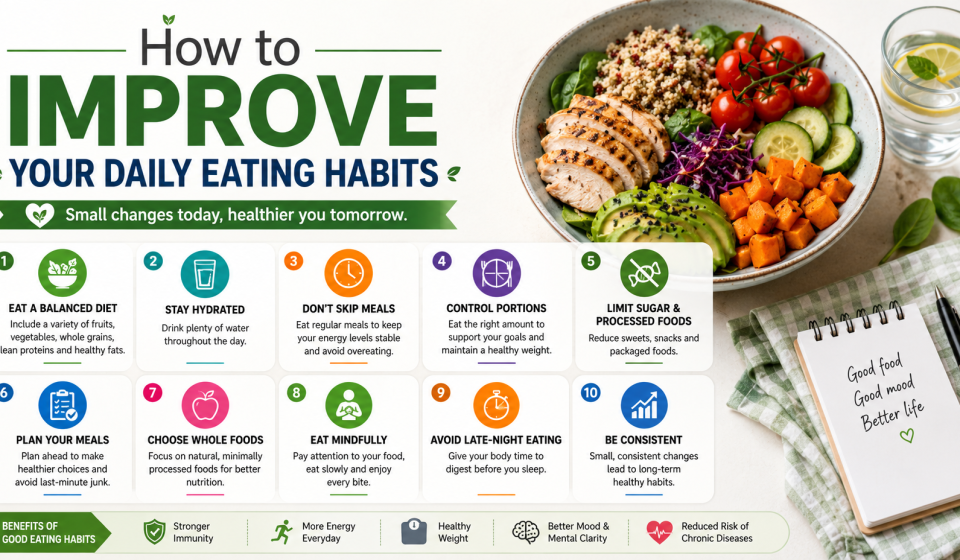

Learn how to improve your daily eating habits with 15 simple tips, healthy food choices, balanced meals, and practical nutrition advice for a healthier lifestyle.
Healthy eating is one of the most important parts of maintaining a healthy lifestyle. The food we eat every day provides energy, supports body functions, and helps us stay active throughout the day. However, busy schedules, unhealthy snacks, irregular meal times, and frequent consumption of processed foods can make it difficult to maintain good eating habits. Many people believe that healthy eating requires expensive ingredients or a strict diet, but small and consistent changes can make a significant difference.
Improving your daily eating habits does not mean giving up all your favorite foods. Instead, it means making better food choices, eating balanced meals, drinking enough water, and understanding your body’s nutritional needs. By developing simple habits and following them regularly, you can support your overall health, improve your relationship with food, and build a sustainable eating routine. This article explains 15 practical ways to improve your daily eating habits without making your lifestyle complicated.
Start Your Day with a Healthy Breakfast
Breakfast can be a useful part of a balanced daily routine because it provides energy and nutrients after an overnight fast. Choosing a nutritious breakfast may also help you manage hunger and concentrate better during morning activities.
Instead of regularly choosing sugary cereals, pastries, or highly processed snacks, try options such as oatmeal, vegetable poha, idli, whole-grain toast, eggs, yogurt, or fruit. You can also include nuts or seeds to add healthy fats and other nutrients.
Choose a breakfast that suits your appetite, schedule, culture, and nutritional needs. A simple, balanced meal is often easier to maintain than an elaborate breakfast that takes too much time to prepare.
Eat a Balanced Diet
A balanced diet provides the body with essential nutrients, including carbohydrates, protein, healthy fats, vitamins, and minerals. Eating a variety of foods helps you obtain these nutrients and supports normal body functions.
Include vegetables, fruits, whole grains, protein-rich foods, and appropriate amounts of healthy fats in your daily meals. Protein sources may include beans, lentils, chickpeas, dairy products, eggs, tofu, fish, or lean meat.
Try to include different food groups rather than relying on one type of food. For example, a lunch containing roti, dal, vegetables, curd, and salad can provide a useful combination of nutrients.
Eat More Fruits and Vegetables
Fruits and vegetables are rich in vitamins, minerals, fiber, and other beneficial plant compounds. Regularly including them in your meals can support digestive health and contribute to a nutritious eating pattern.
Choose a variety of colorful produce, such as carrots, spinach, tomatoes, cucumbers, oranges, apples, bananas, papaya, and seasonal vegetables. Different colors often indicate different naturally occurring nutrients.
Keep washed fruit available for snacks, add vegetables to sandwiches or meals, and include a salad or cooked vegetables with lunch and dinner. Fresh, frozen, and appropriately prepared canned vegetables can all be useful options.
Drink Enough Water Throughout the Day
Water is essential for regulating body temperature, transporting nutrients, and supporting normal bodily functions. Not drinking enough water may contribute to dehydration, tiredness, headaches, and difficulty concentrating.
Make drinking water a regular habit instead of waiting until you feel very thirsty. Carry a reusable water bottle, drink water with meals, and have some available while working or studying.
Water needs vary depending on activity level, climate, health, and other factors. In hot weather or during physical activity, you may need more fluids. Water is generally a good everyday choice, while sugary drinks should be limited.
Reduce Added Sugar
Consuming too much added sugar can make it harder to maintain a healthy eating pattern. Sugary beverages, sweets, packaged desserts, and some breakfast products can contain substantial amounts of added sugar.
Start by reducing sugar in tea or coffee gradually. Replace sugary drinks with water or unsweetened beverages more often, and compare nutrition labels when buying packaged foods.
You do not need to eliminate every sweet food from your diet. Instead, enjoy sweets in moderate portions and make nutritious foods your regular choices.
Choose Whole Grains Instead of Refined Grains
Whole grains contain more of their original grain components, including fiber, than refined grains. Fiber supports digestion and can help meals feel satisfying.
Consider including whole-wheat roti, oats, brown rice, whole-grain bread, millet, and other whole grains in your diet. You can gradually replace some refined-grain products with whole-grain alternatives.
For example, you might combine whole-wheat roti with dal and vegetables or prepare oats with fruit and nuts. Choose foods that fit your preferences, budget, and availability.
Include Protein in Your Meals
Protein helps build and repair body tissues and supports muscles and other essential functions. Including protein-rich foods in meals can also help you feel satisfied after eating.
Good options include lentils, beans, chickpeas, kidney beans, soy products, milk, yogurt, eggs, fish, and lean meat. Nuts and seeds can contribute protein as well as healthy fats.
Try adding dal to lunch, yogurt to breakfast, or roasted chickpeas as a snack. Eating a variety of protein sources can help you maintain a nutritious diet.
Avoid Skipping Meals Regularly
Skipping meals may leave some people feeling extremely hungry later in the day, which can make food choices more difficult. Regular meals can help provide energy and make it easier to plan a balanced diet.
However, everyone’s appetite and schedule are different, and eating at exactly the same times is not necessary for everyone. The important thing is to meet your nutritional needs and develop a routine that works for you.
Prepare simple meals in advance if you have a busy schedule. Keeping fruit, nuts, yogurt, or other convenient foods available can also help when you need something between meals.
Reduce Processed and Fast Foods
Fast food and highly processed foods can be convenient, but some options contain large amounts of salt, added sugar, or saturated fat. Eating them frequently may leave less room for foods that provide essential nutrients.
You do not need to avoid every packaged food. Instead, pay attention to ingredients, serving sizes, and nutrition labels, and choose less processed options more often.
Try homemade sandwiches, vegetable pulao, dal, soups, or simple wraps when possible. Preparing food at home gives you more control over ingredients, cooking methods, and portion sizes.
Practice Portion Awareness
Eating appropriate portions can help you respond to hunger and fullness while enjoying a variety of foods. The right amount depends on your age, activity level, appetite, health, and individual nutritional needs.
Use a plate that includes vegetables, a source of protein, and grains or other carbohydrate-rich foods. This is a flexible guide rather than a strict rule.
Eat slowly and notice when you begin to feel comfortably full. Avoid forcing yourself to finish food when you are satisfied, and remember that portion needs can change from day to day.
Eat Mindfully and Avoid Distractions
Mindful eating means paying attention to your food, hunger, and fullness while eating. It can help you recognize your eating patterns and enjoy meals more consciously.
Whenever possible, sit down for meals, chew slowly, and limit distractions such as television or constant phone use. Notice the taste, smell, and texture of the food.
Avoid treating every meal as a task to finish quickly. Taking enough time to eat comfortably can make meals more enjoyable and help you become more aware of your body’s signals.
Plan Your Meals in Advance
Meal planning can make healthy eating easier, especially when your daily schedule is busy. Planning helps you organize ingredients, reduce last-minute food decisions, and use groceries efficiently.
At the beginning of the week, choose a few breakfast, lunch, dinner, and snack options. Prepare ingredients such as chopped vegetables, cooked beans, or washed fruit ahead of time when convenient.
You do not need a complicated meal plan. Even deciding what to cook for the next day can help you make more balanced choices and reduce unnecessary food waste.
Choose Healthy Snacks
Snacks can provide nutrients and energy between meals when you are hungry. The key is to choose options that suit your needs rather than relying on highly sugary or salty snacks every day.
Some useful choices include fresh fruit, plain yogurt, roasted chickpeas, a small handful of nuts, boiled eggs, or vegetable sticks with a suitable dip.
Keep convenient nutritious snacks at home, at work, or in your bag when practical. Pay attention to hunger and choose a snack when you need one; you do not have to eat between meals if you are not hungry.
Cook More Meals at Home
Cooking at home can help you understand what goes into your food. You can adjust the amount of salt, sugar, oil, and other ingredients according to your preferences and nutritional needs.
Begin with easy recipes such as vegetable khichdi, dal, soup, stir-fried vegetables, whole-wheat sandwiches, or rice with beans. Use a variety of cooking methods, including steaming, boiling, baking, and roasting.
If you have limited time, prepare larger portions of suitable dishes and refrigerate or freeze them safely for later. Simple home-cooked meals can be both practical and nutritious.
Build Healthy Habits Gradually
Changing every eating habit at once can feel overwhelming. A more realistic approach is to introduce small improvements and repeat them until they become part of your routine.
For example, drink water more regularly during the first week, add a serving of vegetables during the second week, and prepare homemade snacks during the third week. Adjust your plan according to what works for you.
Do not feel discouraged if you occasionally eat fast food or miss a planned meal. One meal does not determine your overall health. Consistency over time matters more than trying to follow a perfect diet every day.
Common Mistakes to Avoid When Improving Eating Habits
Many people make healthy eating unnecessarily difficult by following extreme diets or setting unrealistic expectations. Avoid these common mistakes:
- Skipping meals to compensate for eating more earlier.
- Completely eliminating entire food groups without a medical reason.
- Replacing meals with unproven supplements or detox products.
- Drinking sugary beverages instead of water most of the time.
- Ignoring food labels and serving sizes.
- Following restrictive diets that do not meet your nutritional needs.
- Expecting immediate results from a few days of healthier eating.
Healthy eating should be flexible, balanced, and sustainable. If you have a medical condition, food allergy, or special dietary requirement, consult a qualified healthcare professional or registered dietitian for personalized guidance.
A Simple Daily Healthy Eating Routine
Here is an example of how you can organize your daily food choices. Adjust the foods and portions to suit your appetite, culture, budget, and nutritional needs.
Breakfast: Oats with fruit, vegetable poha, idli, or eggs with whole-grain toast.
Mid-morning: Fresh fruit or another snack if hungry.
Lunch: Roti or rice, dal or another protein source, cooked vegetables, and curd or salad.
Evening snack: Roasted chickpeas, yogurt, nuts, or fruit.
Dinner: A balanced meal containing vegetables, protein, and grains or another suitable carbohydrate source.
Throughout the day: Drink water regularly and choose additional fluids according to your needs.
This is only an example, not a fixed diet plan. Your portion sizes and meal timing should reflect your individual requirements.
Benefits of Improving Your Daily Eating Habits
Developing healthier eating habits can offer several long-term benefits:
1. Better nutrient intake: A varied diet helps supply the vitamins, minerals, protein, and other nutrients your body needs.
2. Improved digestive health: Fiber from vegetables, fruits, legumes, and whole grains supports normal bowel function.
3. Steadier energy throughout the day: Balanced meals can help provide sustained energy and reduce the inconvenience of relying on sugary snacks.
4. Support for heart health: A nutritious eating pattern that emphasizes vegetables, fruits, whole grains, and suitable unsaturated fats can support cardiovascular health.
5. Better long-term health: Healthy eating habits can contribute to lowering the risk of certain diet-related chronic diseases.
6. A healthier relationship with food: Flexible eating habits allow you to enjoy different foods without unnecessary guilt or extreme restrictions.
Results vary between individuals, and healthy eating works best alongside other lifestyle practices, such as regular physical activity, adequate sleep, and appropriate medical care.
Sources
- https://www.who.int/news-room/fact-sheets/detail/healthy-diet
- https://nutritionsource.hsph.harvard.edu/healthy-eating-plate/
- https://www.cdc.gov/nutrition/
- https://www.nhs.uk/live-well/eat-well/food-guidelines-and-food-labels/the-eatwell-guide/
Conclusion
Improving your daily eating habits does not require a strict diet, expensive foods, or major lifestyle changes. Simple actions such as eating a balanced breakfast, including more fruits and vegetables, drinking enough water, choosing whole grains, and reducing added sugar can help you develop a healthier routine.
The most effective approach is to start with small, realistic changes and follow them consistently. Plan meals when possible, pay attention to hunger and fullness, and enjoy a variety of foods in appropriate amounts. Remember that healthy eating is not about perfection; it is about making choices that support your well-being over time.
By following these practical tips, you can gradually build better eating habits and support a healthier, more active lifestyle.
Frequently Asked Questions (FAQs)
1. How can I improve my daily eating habits?
Start by eating balanced meals, including fruits and vegetables, drinking water regularly, choosing whole grains, and limiting foods high in added sugar and excess salt. Make small changes that you can maintain.
2. What are the healthiest foods to eat every day?
A varied diet can include vegetables, fruits, whole grains, beans, lentils, nuts, seeds, and suitable protein sources. The best combination depends on your nutritional needs, preferences, and health conditions.
3. Is breakfast necessary for a healthy diet?
Breakfast can provide important nutrients and energy, but its importance varies between individuals. Focus on meeting your overall nutritional needs and choosing a routine that suits your appetite and lifestyle.
4. How much water should I drink daily?
Fluid needs depend on your activity level, climate, diet, and health. Drink water regularly throughout the day and increase your intake when appropriate, such as during hot weather or exercise. Follow medical advice if you have a condition requiring fluid restrictions.
5. How long does it take to develop healthy eating habits?
There is no fixed timeline. Some changes become routine quickly, while others take longer. Start with one or two manageable improvements and build on them gradually.