
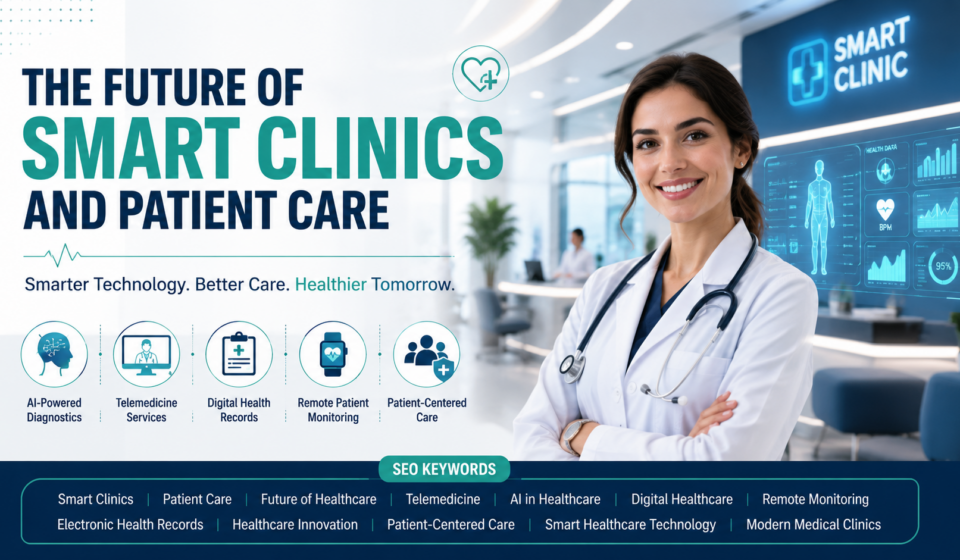

Healthcare is changing faster than ever before. Patients today expect quicker appointments, accurate diagnoses, personalized treatment, and better communication from healthcare providers. Traditional clinics are gradually evolving into smart clinics that combine advanced technology, digital systems, and patient-focused care to improve healthcare experiences and outcomes.
What Are Smart Clinics?
Smart clinics are healthcare facilities that use advanced digital technologies and automated systems to improve patient care, clinic operations, and medical decision-making. These clinics combine healthcare expertise with technology to deliver faster, safer, and more efficient services.
Unlike traditional clinics, smart clinics rely heavily on digital tools such as:
- Electronic health records (EHRs)
- Artificial intelligence (AI)
- Telemedicine platforms
- Smart diagnostic equipment
- Wearable health monitoring devices
- Online appointment systems
- Automated patient management software
The goal of smart clinics is to provide a better healthcare experience while improving clinical accuracy and reducing operational problems.
How Technology Is Transforming Patient Care
Technology is reshaping healthcare in many ways. Smart clinics are using digital systems to improve communication, diagnosis, treatment planning, and patient monitoring.
Faster Diagnosis
AI-powered diagnostic tools can analyze medical data quickly and help doctors identify diseases earlier. This can improve treatment outcomes and reduce the chances of medical errors.
Better Access to Healthcare
Telemedicine allows patients to consult doctors remotely through video calls or mobile apps. This is especially helpful for people living in remote areas or patients with mobility challenges.
Personalized Treatment Plans
Smart clinics can collect and analyze patient data to create customized treatment plans based on individual health conditions, lifestyle, and medical history.
Improved Communication
Patients can now receive digital prescriptions, appointment reminders, test results, and follow-up instructions directly through mobile apps or patient portals.
The Role of Artificial Intelligence in Smart Clinics
Artificial intelligence is becoming one of the most important technologies in modern healthcare. AI systems can help doctors and healthcare staff make better decisions and improve patient care.
AI-Assisted Diagnosis
AI tools can examine medical images, laboratory reports, and patient symptoms to support accurate diagnoses. This helps doctors detect diseases earlier and begin treatment faster.
Predictive Healthcare
AI can analyze patient data to identify health risks before serious complications occur. Clinics can use predictive analytics to manage chronic diseases more effectively.
Administrative Automation
Smart clinics also use AI to automate scheduling, billing, patient registration, and record management, reducing administrative workload and improving efficiency.
Telemedicine and Virtual Healthcare Services
Telemedicine has become one of the fastest-growing healthcare trends in recent years. Smart clinics are investing heavily in virtual healthcare systems because they improve convenience for both patients and healthcare providers.
Benefits of Telemedicine
- Reduced travel time for patients
- Faster access to healthcare professionals
- Easier follow-up consultations
- Lower healthcare costs
- Better access for rural communities
Virtual consultations are especially useful for routine checkups, mental health support, chronic disease management, and minor illnesses.
As internet connectivity improves globally, telemedicine is expected to become a permanent part of modern healthcare systems.
Smart Devices and Remote Patient Monitoring
Wearable devices and remote monitoring systems are changing how clinics track patient health.
Devices such as smartwatches, glucose monitors, blood pressure trackers, and heart rate monitors can collect real-time health information and send it directly to healthcare providers.
Advantages of Remote Monitoring
- Early detection of health problems
- Better chronic disease management
- Reduced hospital admissions
- Improved patient engagement
- Continuous health tracking
Doctors can monitor patients remotely and intervene quickly if health conditions worsen.
Electronic Health Records and Data Management
Electronic health records are one of the foundations of smart clinics. Digital records help healthcare providers access patient information instantly and securely.
Benefits of Digital Records
- Faster patient registration
- Better coordination between doctors
- Reduced paperwork
- Improved treatment accuracy
- Easier sharing of medical history
Electronic records also help reduce duplication of medical tests and improve communication between healthcare departments.
Patient-Centered Healthcare in Smart Clinics
Modern patients expect healthcare experiences that are convenient, transparent, and personalized. Smart clinics are focusing heavily on patient-centered care.
Personalized Healthcare Experience
Smart clinics can use patient data to customize treatment plans, appointment schedules, and wellness recommendations.
Reduced Waiting Times
Digital scheduling systems and automated check-ins help reduce long waiting periods.
Better Patient Engagement
Patients can access their medical records, communicate with doctors, and manage appointments through mobile applications and online portals.
Comfortable Healthcare Environments
Many smart clinics are designed to provide relaxing and stress-free environments with modern interiors, digital kiosks, and efficient workflows.
Challenges Facing Smart Clinics
Although smart clinics offer many advantages, there are still several challenges that healthcare providers must address.
Data Privacy and Security
Healthcare data is highly sensitive, and clinics must protect patient information from cyber threats and unauthorized access.
High Technology Costs
Implementing advanced healthcare systems can be expensive for smaller clinics and healthcare providers.
Staff Training
Healthcare professionals need proper training to use modern digital systems effectively.
Technology Dependence
Overreliance on technology may create operational risks if systems fail or experience technical issues.
Despite these challenges, healthcare organizations continue investing in smart clinic technology because of its long-term benefits.
The Future of Smart Clinics
The future of smart clinics looks extremely promising. Healthcare technology is expected to become even more advanced in the coming years.
AI-Powered Healthcare Expansion
Artificial intelligence will continue improving diagnostics, predictive healthcare, and treatment recommendations.
More Advanced Remote Monitoring
Future wearable devices may monitor additional health conditions in real time and alert doctors automatically.
Robotics in Healthcare
Some smart clinics may use robotic systems for surgeries, patient assistance, and medication delivery.
Fully Integrated Healthcare Systems
Future clinics will likely connect hospitals, laboratories, pharmacies, and specialists into unified digital healthcare networks.
Greater Focus on Preventive Care
Smart clinics will increasingly focus on preventing diseases rather than only treating illnesses after they develop.
Source
https://sl1nk.com/i13jvbc
https://l1nq.com/hbdgqde
Conclusion
Smart clinics are transforming the future of healthcare by combining advanced technology with patient-focused care. From artificial intelligence and telemedicine to wearable devices and digital health records, smart clinics are improving healthcare accessibility, efficiency, and treatment quality.
Patients today want faster, safer, and more personalized healthcare experiences, and smart clinics are helping meet those expectations. Although challenges such as cybersecurity and implementation costs remain, the long-term benefits of smart healthcare systems are significant.
As technology continues to evolve, smart clinics will become even more important in delivering modern, efficient, and compassionate patient care. The future of healthcare is becoming smarter, more connected, and more focused on improving patient outcomes worldwide.
FAQs
1. What is a smart clinic?
A smart clinic is a healthcare facility that uses advanced digital technologies such as AI, telemedicine, electronic records, and smart devices to improve patient care and clinic operations.
2. How do smart clinics improve patient care?
Smart clinics improve patient care through faster diagnosis, remote consultations, personalized treatments, reduced waiting times, and better communication.
3. What technologies are commonly used in smart clinics?
Common technologies include artificial intelligence, telemedicine platforms, wearable health devices, electronic health records, and automated scheduling systems.
4. Are smart clinics safe for patient data?
Most smart clinics use advanced cybersecurity systems to protect patient information, although data privacy remains an important challenge in healthcare.
5. What is the future of smart healthcare?
The future of smart healthcare includes AI-powered diagnostics, advanced remote monitoring, robotics, predictive healthcare, and fully integrated digital healthcare systems.